The Irresistible Allure of Dolmades: A Journey into Greek Culinary Tradition
Few dishes evoke the warmth and hospitality of Greek cuisine quite like
dolmades. These delightful parcels of rice and fragrant herbs, lovingly wrapped in tender grape leaves, are more than just a meal; they are a celebration of fresh ingredients, time-honored techniques, and shared moments around the table. While variations exist across the Mediterranean, the Greek rendition, particularly the meat-free version, stands out as a vibrant testament to the country's rich culinary heritage. Often served as a quintessential
meze (appetizer), dolmades can easily elevate any gathering, whether as a prelude to a grand feast or the star of a light, satisfying lunch.
For many, dolmades are steeped in cherished family memories. Generations have gathered in kitchens, with parents or grandparents patiently demonstrating the intricate art of rolling. The playful struggle of clumsy fingers trying to perfectly encase the aromatic filling, followed by encouraging words and shared laughter, is a universal experience. This article will guide you through crafting your own perfect rice and herb-filled
Greek stuffed grape leaves, ensuring each bite is a taste of tradition and pure culinary bliss.
The Heart of Greek Cuisine: Understanding Dolmades as Mezedes
In Greek culture, food is deeply intertwined with social connection, and the concept of
meze (plural:
mezedes) embodies this perfectly. Far beyond simple appetizers, mezedes are small plates designed for sharing, encouraging conversation, and lingering at the table. They can precede a main meal or, quite often, form the entire meal themselves, creating a mosaic of flavors and textures. From savoury Greek meatballs (
keftedes) and flaky cheese pies (
tyropitakia) to an array of vibrant dips and spreads, mezedes are a cornerstone of Greek hospitality. Among these beloved offerings,
dolmades hold a special place, revered for their delicate flavour and satisfying texture.
The versatility of
dolmades is one of their most appealing characteristics. While some recipes feature a savoury ground meat filling, the vegetarian version, highlighted here, offers a lighter, bright, and equally flavourful experience. This makes them suitable for a wider audience and a fantastic option for those exploring the vibrant tastes of the Mediterranean diet. The combination of plump rice, fresh herbs like dill and parsley, and the tangy grape leaves creates a symphony of taste that is both comforting and exhilarating.
Mastering the Filling: A Symphony of Flavors
The soul of truly exceptional
dolmades lies in their filling. It's a careful balance of textures and aromas, designed to awaken the palate and leave a lasting impression. Getting this right is crucial for success.
Choosing Your Ingredients Wisely
Success begins with quality ingredients. For your
rice and herb filling, consider these choices:
*
Grape Leaves: While fresh vine leaves, picked directly from the vine, are traditional and yield the most authentic flavour, they can be seasonal and harder to find. Most home cooks opt for jarred grape leaves, which are readily available year-round. If using jarred, remember to rinse them thoroughly to remove excess brine and soak them briefly if they feel overly salty or stiff.
*
Rice: A medium-grain rice like Arborio or Carolina is often preferred for its ability to absorb liquids and become tender without turning mushy. Its starchiness also helps bind the filling.
*
Herbs: Fresh is non-negotiable! Dill and flat-leaf parsley are the classic duo, imparting a bright, herbaceous lift. For an extra layer of complexity, consider adding a touch of fresh mint or even a pinch of dried oregano.
*
Aromatics: Finely diced onion and a hint of lemon zest form the aromatic backbone. Some recipes also include finely chopped fennel, which adds a subtle anise note that complements the other flavours beautifully.
*
Pine Nuts: These small nuts contribute a delightful texture and a rich, buttery flavour that elevates the filling. Toasting them lightly before adding can enhance their nuttiness.
*
Olive Oil: As with all Greek cooking, a good quality extra virgin olive oil is paramount. It’s not just a cooking medium; it's a flavour enhancer.
*
Broth & Lemon Juice: Chicken or vegetable broth provides depth, while fresh lemon juice adds essential brightness and tang, cutting through the richness.
Crafting the Aromatic Rice Base
The preparation of the filling is a multi-step process that builds layers of flavour.
1.
Sauté the Aromatics: Begin by coating a large sauté pan with a generous amount of olive oil. Over medium heat, gently cook the finely diced onion, fennel (if using), and fresh lemon zest. Stir them frequently until they become soft and translucent, typically around 10 minutes. This slow cooking allows their natural sugars to caramelize slightly, creating a sweet and savoury base.
2.
Add Pine Nuts and Rice: Once the aromatics are softened, add the pine nuts and the uncooked rice to the pan. Sauté for another 2 minutes, stirring continuously to ensure the rice grains are thoroughly coated in the olive oil and begin to toast lightly. This step, known as *toasting*, helps prevent the rice from becoming gummy and allows it to absorb liquids more evenly.
3.
Parboil with Broth: Pour in about half a cup of chicken or vegetable stock. Lower the heat and simmer gently, stirring occasionally, until the liquid is almost completely absorbed and the rice is *al dente* – meaning it’s still firm to the bite but has begun to soften. This partial cooking, lasting about 10 minutes, allows the rice to start swelling and absorb the initial flavours, ensuring a tender, flavourful filling later.
4.
Cool and Finish: Scrape the parboiled rice mixture into a large bowl and allow it to cool completely. This cooling step is important for two reasons: it stops the rice from cooking further, and it prevents the fresh herbs from wilting prematurely when added. Once cool, stir in the finely chopped fresh dill and parsley. Season generously with salt and freshly ground black pepper. Some cooks also add a tiny pinch of sugar to balance the tang and herbs. For more in-depth guidance on various techniques, you might find
Mastering Dolmades: Your Guide to Greek Stuffed Grape Leaves helpful.
The Art of the Wrap: Assembling Your Dolmades
The act of rolling
dolmades is perhaps the most iconic part of the process, and while it might seem daunting at first, it's a skill quickly acquired with practice. Think of it as a meditative culinary craft.
Preparing the Grape Leaves
Whether fresh or jarred, preparing your grape leaves correctly is essential for pliable, easy-to-roll wrappers.
1.
Blanching: If using fresh grape leaves, bring a large pot of water to a simmer. Blanch the leaves in the hot water for about 5 minutes until they become pliable and their colour deepens slightly. This process also helps to remove any bitterness. For jarred leaves, a thorough rinse and possibly a brief soak in cool water will suffice to remove excess brine.
2.
Trimming and Drying: Carefully drain the blanched leaves. Using kitchen shears, trim off any tough stems and thick, hard veins that might make rolling difficult or affect the texture. Lay the leaves flat on paper towels and gently pat them dry. Excess moisture can make them slippery and harder to handle.
The Rolling Technique
Now for the fun part – the assembly line!
1.
Positioning: Lay a single grape leaf on a clean work surface with the shiny side facing down (the rougher side should be up, as it will be on the inside). Orient the leaf so the stem end is pointing towards you, and the wider, lobed end points away.
2.
Filling Placement: Place about 2 tablespoons of the cooled rice filling near the stem end of the leaf, forming a small log shape. Don't overfill, as the rice will expand during cooking.
3.
Folding:
* First, fold the stem end of the leaf up and over the filling, creating a neat base.
* Next, fold both sides (the "wings" of the leaf) inwards towards the middle, overlapping slightly.
* Finally, starting from the folded stem end, roll the leaf upwards towards the tip, creating a snug, cigar-like shape. The key here is to roll it *snugly* but not *overly tight*. Remember, the rice will swell significantly during the cooking process, and if it's too tight, the dolmades might burst.
4.
Securing: Once rolled, gently squeeze the dolma in the palm of your hand to secure the roll and ensure it holds its shape.
5.
Repeat: Continue this process with the remaining grape leaves and filling. Don't be discouraged if your first few attempts aren't perfectly uniform; practice makes perfect, and even the "imperfect" ones will taste just as delicious! The joy of making
Authentic Dolmades: The Traditional Greek Meze Recipe lies in the hands-on experience.
The Gentle Simmer: Cooking to Perfection
With all your beautiful
dolmades rolled, the final stage is to gently cook them, allowing the rice to fully absorb the cooking liquid and for all the flavours to meld harmoniously.
Layering for Success
1.
Choose Your Vessel: A large Dutch oven or a wide, deep skillet with a tight-fitting lid is ideal for cooking dolmades.
2.
Layering: Arrange the rolled dolmades seam-side down in a single layer at the bottom of the pan. This helps prevent them from unravelling during cooking. If you have many, you can layer them on top of each other, ensuring they are packed snugly to support each other.
3.
Optional Base: For added protection against sticking and an extra flavour boost, you can line the bottom of the pan with a few extra grape leaves or thin slices of lemon before placing the dolmades.
The Braising Liquid
This liquid not only cooks the rice but also infuses the dolmades with further flavour.
1.
Combine Liquids: In a measuring cup, combine the remaining chicken or vegetable broth, the remaining olive oil, and a generous squeeze of fresh lemon juice.
2.
Pour Over Dolmades: Carefully pour this liquid mixture over the arranged dolmades. The liquid should reach approximately halfway up the rolls. If it doesn't, add a little extra water until the desired level is achieved. This ensures they cook through steam and absorb liquid without being completely submerged and becoming waterlogged.
Slow and Steady Wins the Race
Patience is key for tender, flavourful
Greek stuffed grape leaves.
1.
Simmer Gently: Cover the pan tightly with its lid and place it over low heat. Bring the liquid to a gentle simmer and let the dolmades cook undisturbed for 30 to 40 minutes.
2.
Check for Doneness: After 30 minutes, carefully check for tenderness by piercing a dolma with a fork. It should yield easily, and the rice should be fully cooked and soft. If not, continue to cook for another 5-10 minutes.
3.
Resting: Once cooked, remove the pan from the heat but keep it covered. Allow the dolmades to rest for at least 15-20 minutes. This resting period is crucial, as it allows the rice to fully absorb any remaining liquid, firm up slightly, and for the flavours to truly deepen and meld.
Serving Your Homemade Dolmades
One of the beauties of
dolmades is their versatility in serving. They are delightful warm, at room temperature, or even chilled straight from the refrigerator, making them perfect for meal prep or picnics.
Traditionally, these
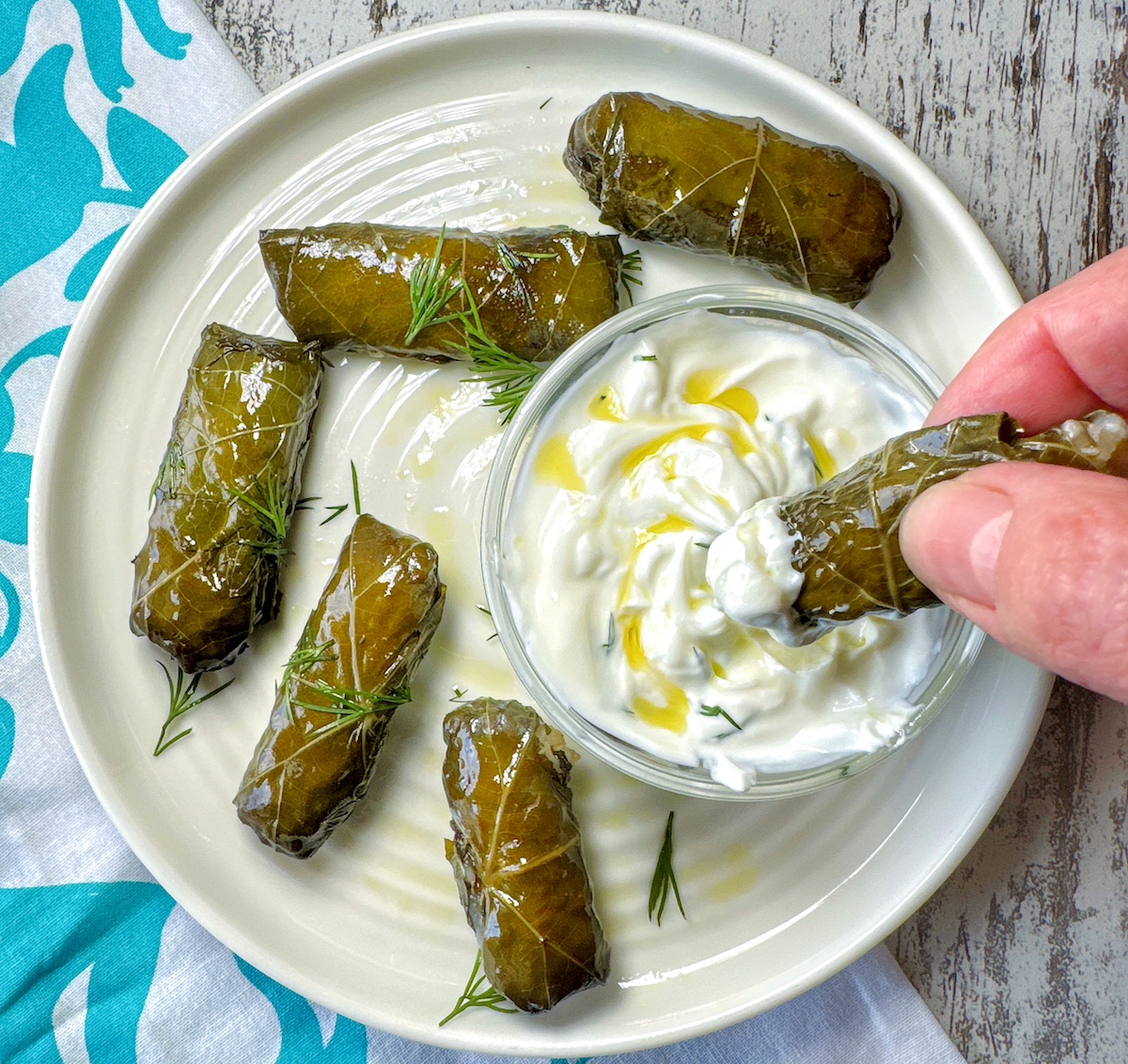
meat-free dolmades are served simply with a generous squeeze of fresh lemon juice, which brightens their herbaceous notes. They are also incredibly delicious alongside a dollop of creamy Greek yogurt or homemade tzatziki sauce, whose cooling tang provides a wonderful contrast to the savoury filling. Present them as part of a larger meze platter with olives, feta cheese, and crusty bread, or enjoy them as a light and satisfying meal on their own.
Conclusion
Crafting your own
dolmades is a truly rewarding culinary experience. From the careful selection of fresh herbs and aromatics to the satisfying rhythm of rolling each individual grape leaf, every step is an act of creation that connects you to generations of Greek cooks. The resulting delicate, flavourful parcels are not just food; they are an embodiment of tradition, community, and the vibrant tastes of the Mediterranean. So, gather your ingredients, embrace the process, and prepare to delight your senses with these truly perfect
rice and herb filled grape leaves. They are a timeless classic that will bring the essence of Greek hospitality straight to your table.